

Ammunition Explained: Calibers, Types, Materials, and How to Choose the Right Ammo
ammunition guide
If you’re new to firearms — or even if you’ve been shooting for years — ammunition can feel confusing. With dozens of calibers, bullet types, materials, and brands available, choosing the right ammo isn’t always straightforward.
At Coastal Firearms, we believe education is part of responsible firearm ownership. Understanding ammunition helps you shoot more safely, more accurately, and more confidently.
This guide breaks down the basics so you can make informed decisions whether you’re training at the range, hunting, or protecting your home.
What Does “Caliber” Mean?
Caliber refers to the diameter of the bullet (and sometimes the barrel) measured in inches or millimeters.
Common examples include:
- 9mm (9×19mm)
- .380 ACP
- .45 ACP
- .223 Remington / 5.56 NATO
- .308 Winchester
- 12 Gauge (shotgun)
Important note: some calibers look similar but are not interchangeable, such as .223 Remington vs. 5.56 NATO in certain rifles. Always verify what your firearm is designed to shoot.
Understanding Cartridge Components
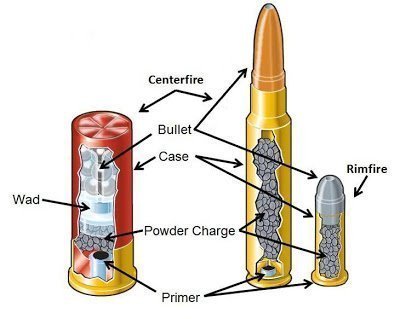
A modern cartridge has four main parts:
- Case — usually brass, sometimes steel or aluminum
- Primer — ignition source struck by the firing pin
- Powder — propellant creating pressure
- Bullet (projectile) — the part that leaves the barrel
Each component influences reliability, recoil, accuracy, and cost.
Bullet Types: FMJ vs Hollow Point vs Specialty Rounds
Choosing the right bullet type depends on your intended use.
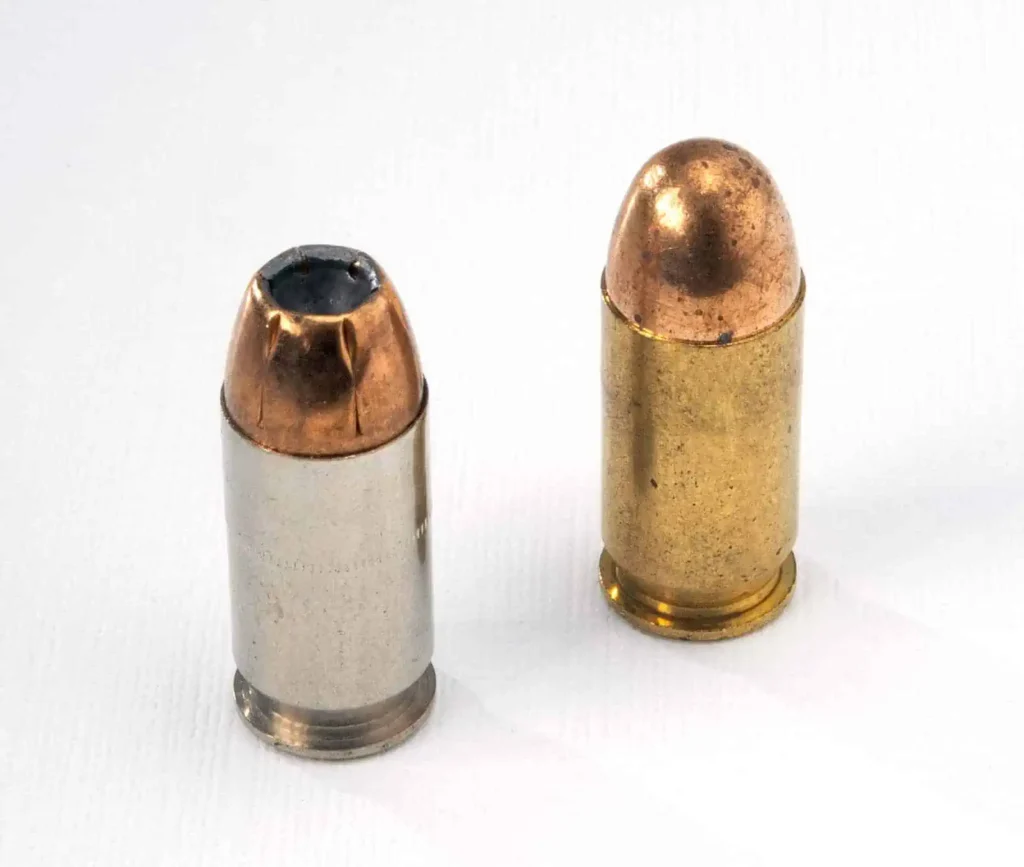
Full Metal Jacket (FMJ)
- Most common and affordable
- Ideal for training and range practice
- Reliable feeding in most firearms
- Typically less expensive
Jacketed Hollow Point (JHP)
- Designed to expand on impact
- Common for self-defense and duty use
- Reduces over-penetration risk
- More expensive than FMJ
Soft Point (SP)
- Often used for hunting
- Controlled expansion
- Good energy transfer to target
Specialty Ammunition
Includes:
- Match-grade precision rounds
- Frangible ammunition
- Subsonic loads
- Defensive polymer-tip rounds
- Steel shot / buckshot / slugs for shotguns
Each serves a specific purpose depending on the shooting application.
Brass vs Steel vs Aluminum Cases
The case material matters more than many shooters realize.
Brass Case
- Most reliable and reloadable
- Expands and seals chamber well
- Preferred for defensive use
- Higher cost
Steel Case
- Less expensive
- Not reloadable
- Can be harder on extractors in some firearms
- Common for high-volume range use
Aluminum Case
- Lightweight
- Not reloadable
- Generally range-only applications
For defensive firearms, brass-cased ammunition is typically recommended.
Shotgun Ammunition Basics
Shotguns use gauge instead of caliber.
Common gauges include:
- 12 Gauge
- 20 Gauge
- .410 Bore
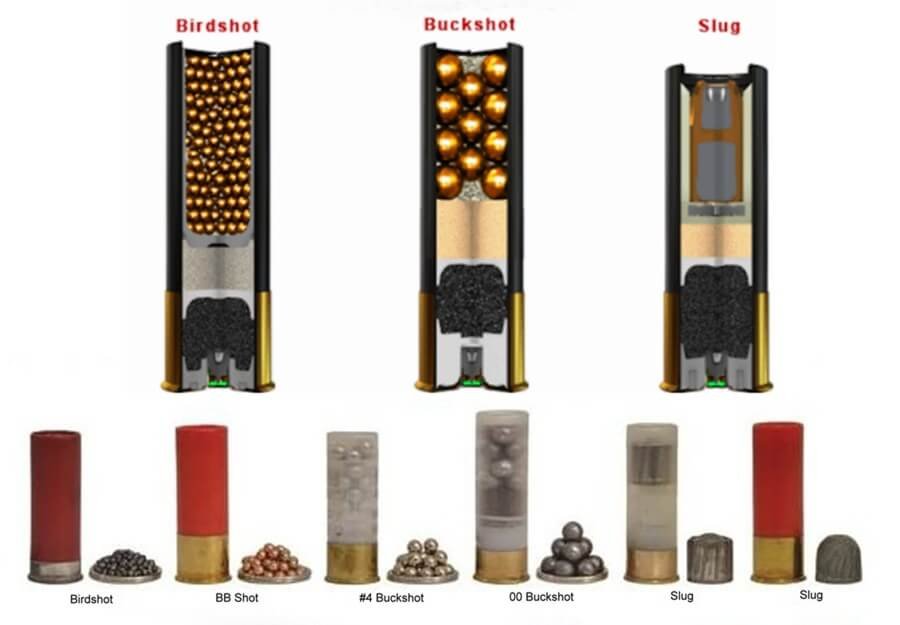
Shotgun shells vary by:
- Shot size (birdshot, buckshot)
- Shell length (2¾”, 3”, 3½”)
- Load weight
- Velocity
For home defense, many shooters choose 00 buckshot in 12 gauge, while hunters select loads based on game type.
How to Choose the Right Ammunition
Ask yourself three questions:
1. What is the purpose?
- Training → FMJ
- Self-defense → Hollow point
- Hunting → Soft point or specialty hunting ammo
2. What does your firearm manufacturer recommend?
Always follow the firearm manual specifications.
3. What performs reliably in your firearm?
Not all guns prefer the same ammo. Testing different brands is normal.
Does Brand Matter?
Quality brands often provide:
- Better consistency
- Cleaner powder
- More reliable primers
- Improved accuracy
Well-known manufacturers include Federal, Winchester, Hornady, Speer, Remington, and others. However, many modern manufacturers produce excellent ammunition, and the best choice is what runs reliably in your firearm.
Storage and Safety Tips
Proper storage preserves ammunition performance and safety.
Best practices:
- Keep ammo cool and dry
- Use sealed containers or ammo cans
- Avoid extreme heat or humidity
- Store separately from firearms if desired
- Rotate defensive ammunition periodically
Ammunition stored correctly can remain usable for decades.
Final Thoughts: Education Builds Confidence
Understanding ammunition removes uncertainty and helps shooters make safer, more effective decisions. Whether you’re a new gun owner or an experienced enthusiast, knowing what you’re loading into your firearm matters.
If you ever have questions about ammunition selection, compatibility, or performance, the Coastal Firearms team is always happy to help.
Responsible ownership starts with education.